

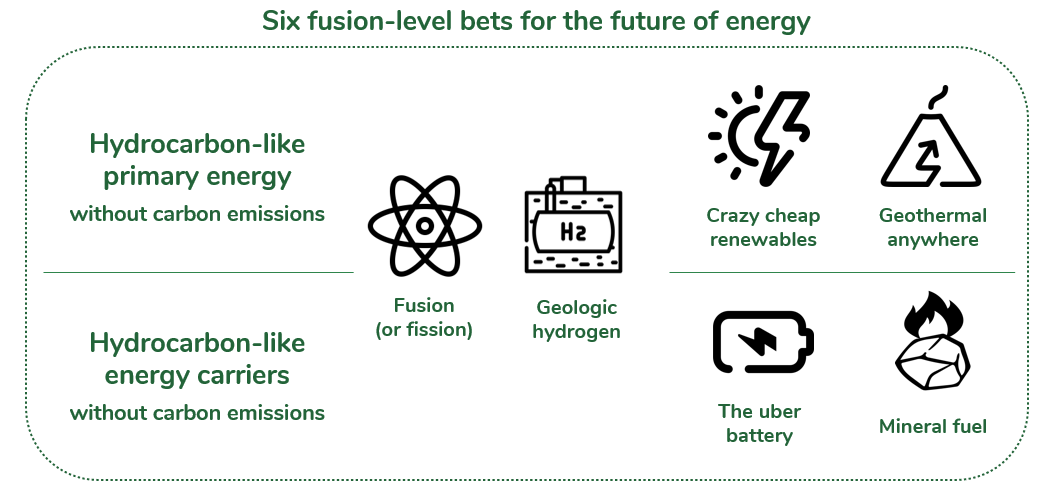
Reminder: This is the final installment of a three-part series on “fusion-level” technology pathways in the energy sector, which is the foundation of human civilization. My goal is to shed some light on the most transformational technology worth betting on for the next hundred years or so.
For each category I’m going to discuss:
The Prize: What makes this technology register on the same civilizational level as fusion?
The Challenge: What makes this technology so difficult and so risky to try to commercialize?
The Path: What would a successful path to commercialization for this technology look like?
Both of the first posts in this series focused on lower-carbon substitutes for the “primary energy” supply which we currently extract from hydrocarbons. Primary energy is what puts the “fossil” in “fossil fuel”: millions of years of solar energy, captured by photosynthesis, and then gradually compressed into chemical energy we can extract from the ground. Part 1 focused on nuclear energy, including both fission and fusion. Part 2 examined three potential alternatives.
Here in Part 3, I’m going to hone in on the “fuel” aspect of fossil fuel — by which I mean the ability to store and transport energy. This is just as important for civilization, and I believe even more difficult to replace than the primary energy we get from fossil fuel.
In this case, I’m going to begin with The Challenge.
The Challenge:
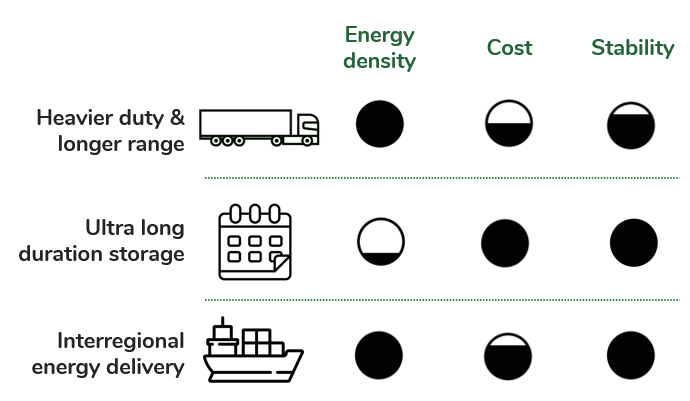
The trouble is, those carbon-hydrogen bonds which give hydrocarbons their name are truly extraordinary energy carriers. Setting carbon emissions aside, matching the performance of hydrocarbons requires excellence on three crucial performance metrics…
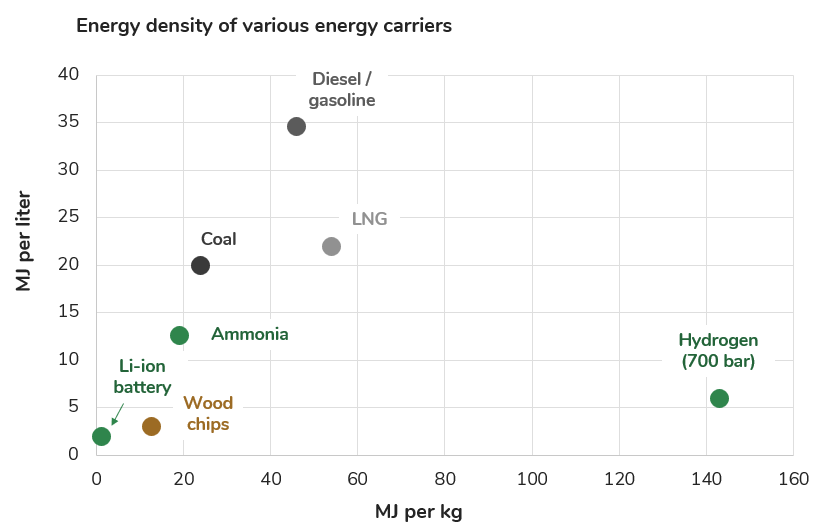
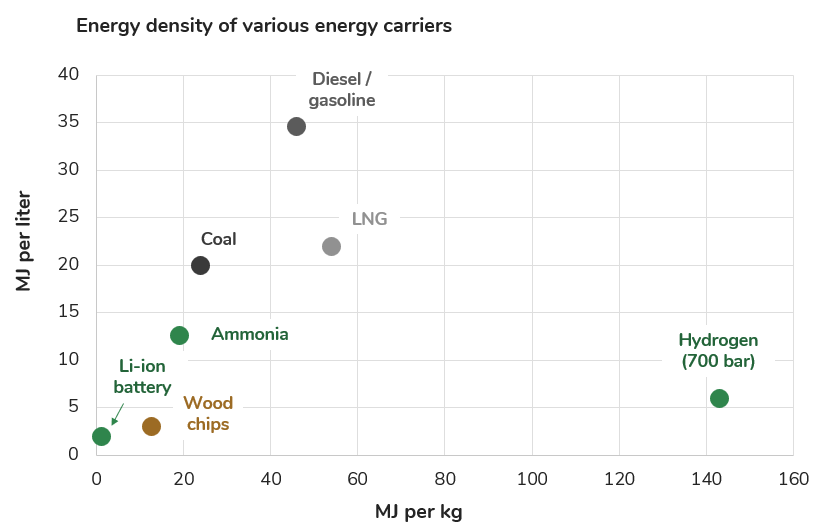
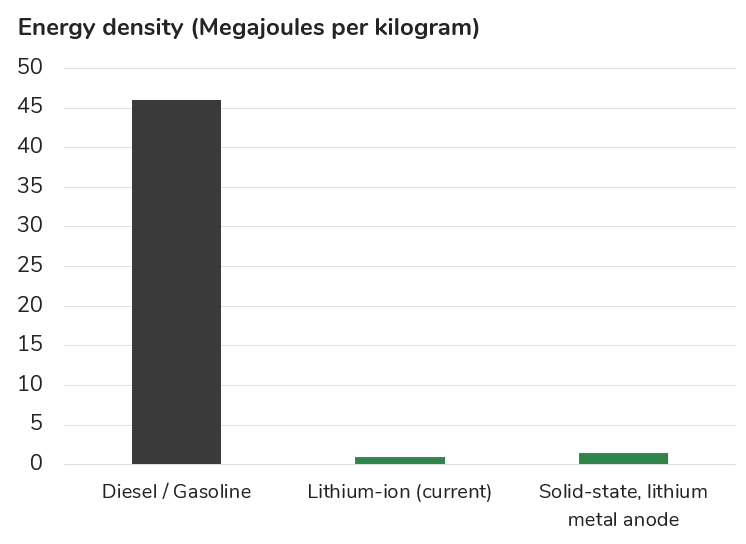
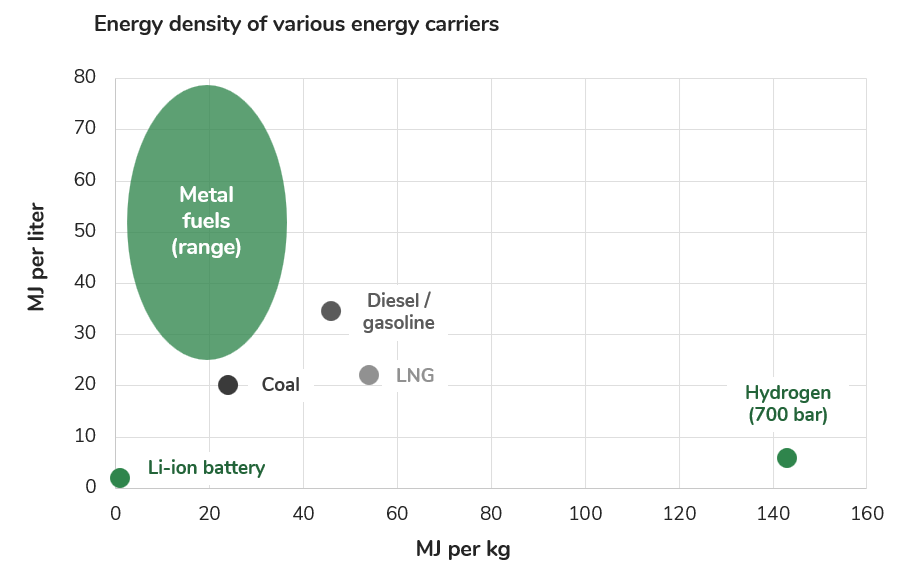
Energy density: Hydrocarbons are heads and tails better than any of the most commonly proposed, low-carbon alternative chemical energy carriers — such as clean hydrogen and its many derivatives, like ammonia. Compare the density of liquid hydrocarbons with lithium-ion batteries — which are the most energy dense class of rechargeable batteries we’ve developed to date, and you’ll immediately see the problem.
Stability: Coal can be dumped into train cars and stockpiled in enormous heaps, in climates ranging from Arizona to Saskatchewan. Oil and gas can be transported in basic steel pipelines, and stored by the exajoule in tanks or underground reservoirs for as long as we need them to be — with barely any energy lost along the way. Yes, fossil fuel is flammable — in some scenarios, explosive — but it’s safe enough that you don’t need a license to pump diesel, operate a natural gas furnace, or barbecue on a charcoal grill.
Cost: Coal and natural gas, as I pointed out in Part 2, remain the cheapest sources of energy on the planet.1 Coal in particular is vexingly, stubbornly cheap in nearly every part of the world. And because hydrocarbons simultaneously serve as primary energy resources and energy carriers, they’re effectively a two-for-one deal. Buy the energy, and you get it packaged up to go for no additional cost.
The Prize:
Hydrocarbons’ high score on each of these variables enables fossil fuel to perform three crucial roles as energy carriers in the global economy. Each of these roles, I believe, is big enough on its own to qualify as a fusion-level prize.
Role #1: Heavier duty, longer range transport: Gasoline, diesel, heavy fuel oil, and kerosene — i.e. liquid hydrocarbons — excel as transport fuels because of their especially high energy density. For most transport applications, this feature is even more important than low cost. (Gasoline & diesel are much more expensive on a joule for joule basis than coal or natural gas.)
Lithium-ion batteries, which utilize the lightest metal on the periodic table in order to carry a charge, are the closest contender to hydrocarbons we have today. They’re dense enough, affordable enough, and stable enough to make electric vehicles a competitive option for the light duty segment, which is why EVs have now claimed over a fifth of the global passenger vehicle market. I believe they’re well positioned to dominate that segment over the next few decades, even without a major leap forward in technology.
Yet the energy density of lithium-ion batteries still pales in comparison to fossil fuel — hence, range anxiety, the eternal boogeyman of electric vehicles, has not yet been fully conquered for most drivers around the world. Range is still a point of friction for passenger vehicles, and a major stumbling block for the “heavy duty” commercial segment. (For more discussion of this issue, check out my previous post, “How will we move the big, heavy things?”) Beyond ground transportation, powering a meaningful share of ocean freight or aviation with current battery technology is basically a pipe dream.
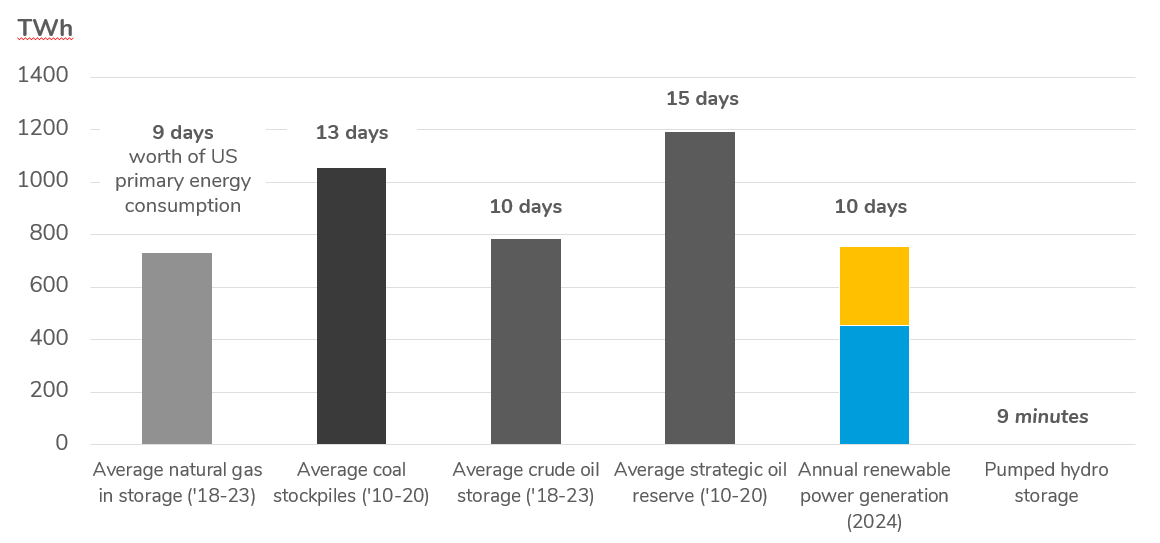
Role #2: Ultra-long-duration energy storage: Hydrocarbons’ distinctive combination of energy density and stability make them well suited for stockpiling in large quantities, at extremely low cost. Despite their remarkable journey down the cost curve, lithium-ion batteries are still much too expensive for storing more than roughly half a day’s worth of energy, at most. Here in the US, we typically store more than 20 days’ worth of primary energy in the form of coal and natural gas stockpiles, plus another 25 days of primary energy in the form of oil reserves (including oil the federal government sets aside as a strategic backstop). America tends to keep more fossil energy sitting in reserve at any given time than all of the energy we managed to produce from wind and solar power in the past year.
To be clear, we don’t necessarily need to keep such a massive quantity of energy on hand. The energy system of the future may be able to get away with less. However, we need to be clear-eyed about the benefits that ultra-long duration storage provides: 1) Economic stability, and 2) National security. In our search for a lower-carbon alternative, we need to keep these benefits in mind.
Alternative solutions for this kind of bulk storage don’t need to be especially lightweight or compact, since they can probably be located out in the middle of nowhere, or crammed into a giant warehouse at the edge of town. But they do need to be extremely cheap — probably no more than 2-3% of the cost of lithium-ion based grid storage — or they’ll add too much to the cost of energy from renewables. They also need to be extremely stable — capable of safely storing energy for months to years at a stretch, without incurring significant additional costs or energy losses.
Role #3: Interregional energy delivery: Some parts of the world are energy-rich, while others are energy-poor. This has been true for the entirety of the fossil fuel era, and will be just as true in an era with much more renewable power. As I wrote in Part II, solar power is already the cheapest source of electricity in the world (and could become much cheaper still) but only in the right places. In North America, even the cheapest wind and solar power is still a little pricier than the marginal cost of natural gas power generation (without subsidies, that is). But in some places around the world, where you can find the right combination of copious sunshine, low-cost labor, abundant land, and favorable policy — e.g. the Middle East — solar has become breathtakingly cheap.
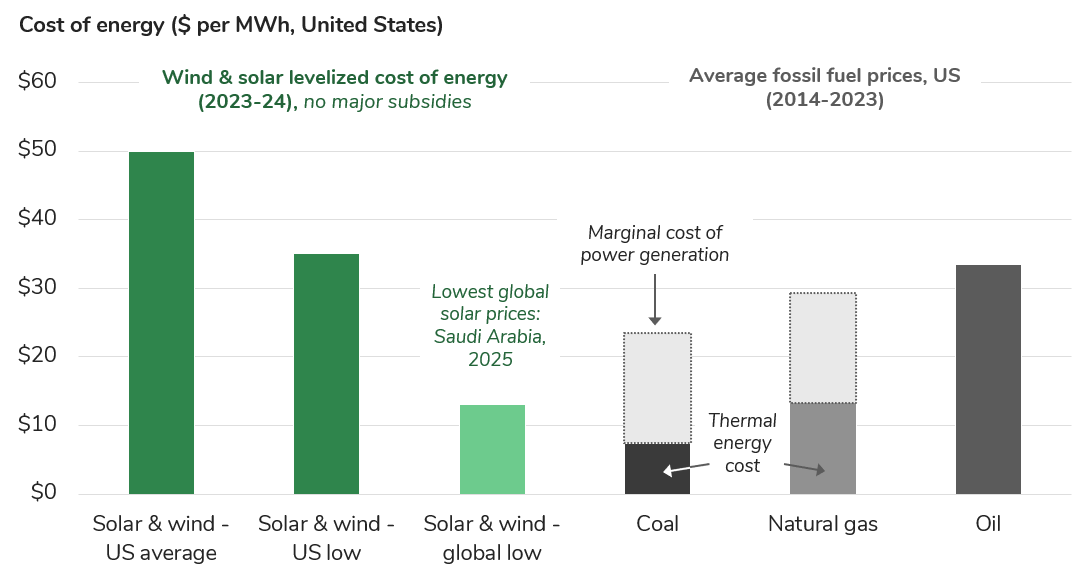
Over the course of this century, I believe there’s a chance that locations with especially cheap solar energy could become major energy exporters, just like the Middle East has been for oil & gas. (In fact, the Middle East could very well add solar to its energy export mix.)
But in order to realize this vision, we’d need a good way of packaging up solar energy so that it can be transported inexpensively across continents and oceans. This would require some kind of novel energy carrier with the rarest combination of features: extremely high energy density plus extremely low cost.
In other words, interregional energy delivery is the hardest job imaginable for any kind of energy carrier we might dream up.
To sum up: Here’s a handy graphical representation of the density, cost, and stability requirements for the three big prizes we’re pursuing.
I’m going to discuss two classes of low-carbon energy carrier which might have a shot at meeting these requirements.
Electrochemical batteries are worth exploring because of their ability to store & release energy in its most versatile form — electricity — without any intermediate thermal or mechanical steps. Batteries also need to be considered because there is such tremendous momentum behind the global supply chain — specifically the lithium-ion battery supply chain, where the hunt for “the uber battery” is already on.
But ultimately, the category in which I see the greatest fusion-level potential is much less well explored. Frankly, I believe this might be the biggest idea in energy that most people have never even heard about: the use of common minerals — specifically, metals — as recyclable fuels.
But let’s start with batteries, which have made the most progress so far.
The Challenge, Part II: Why no “uber battery”?
There’s a good case to be made that we already have the “uber battery” in hand… or at least a close enough approximation, and the best we’re going to get.
As I noted above, lithium-ion batteries have already proven dense enough, cheap enough, and stable enough to completely upend the way we go about our lives in computing, communications, oral hygiene, and even war. They’re also making good progress towards taking over from internal combustion engines in light & medium duty ground transportation. Additionally, they’re now being deployed on electricity grids all over the world, at gigawatt-scale, in order to smooth out the daily peaks and valleys of energy supply & demand.
So why is lithium-ion so tough to beat? Four reasons:
First, lithium-ion is a “jack of all trades” battery. No other battery performs as well across so many critical parameters for such a wide range of applications. For example, zinc-air batteries (commonly used in hearing aids) are denser and cheaper than lithium-ion, but nowhere near as rechargeable. Lead-acid batteries are cheaper, but less rechargeable, less efficient, and much heavier. "Flow” batteries can be made cheaper and longer lasting, but only for longer duration applications.2 And very few batteries can match lithium-ion when it comes to “round trip” efficiency, given that lithium-ion cells retain more than 90% of the energy run through every cycle.
Second, the lithium-ion supply chain is now a continent-spanning marvel of the modern world. At this point, the industry has a fifteen year head start on any other battery technology. Worldwide, there are now tens of thousands of researchers and process engineers on a quest for the next incremental step towards higher performance and lower cost. (Is it hundreds of thousands?) Hence, much to the consternation of every nascent storage company in the market, lithium-ion is still not standing still.
Third, at a fundamental level, lithium is just an extremely attractive element to build a battery around. As I noted above, lithium is the third lightest element on the periodic table, and it also boasts the highest reduction potential. Theoretically, this is simply the best combination of weight and reactivity of all the elements we have to work with.
Fourth, and perhaps most crucially, “lithium-ion” is not a single battery chemistry, but rather a family of diverse anode, cathode, and electrolyte formulations which all make use of lithium to carry a charge back and forth across a cell. This family tree has already branched into two major lineages, which address divergent market needs. One lineage employs a blend of nickel, manganese, and cobalt cathode materials (“NMC”) in order to maximize energy density; while the other opts for a blend of lithium, iron, and phosphate (“LFP”) in order to reduce cost. NMC is ideal for vehicles that can tolerate higher prices in exchange for longer range; while LFP tends to be a better option for short-range vehicles, like city buses, and for stationary power grid applications — both of which are much more sensitive to price than to energy density.
Yet, as daunting as it is to compete with the uber-versatility of the lithium-ion battery — as much of a juggernaut as the industry has become — the uber battery of our dreams would need to be a lot denser than NMC and a lot cheaper than LFP.
Unsurprisingly, when it comes to heavy duty transport, the challenge is energy density; and when it comes to any form of bulk energy storage, the challenge is cost. This raises the question: On its current trajectory, is lithium-ion on track to overcome these challenges?
Beyond NMC and LFP, there are certainly more evolutionary branches on the lithium-ion family tree left to explore. The most well-studied limbs, which have collectively attracted tens of billions of dollars in private investment, are primarily focused on improving density. A large majority of this capital has flowed into just three strategies in particular.
Silicon anodes are intended to increase density and charging speed relative to industry-standard graphite anodes. This is the most mature of the nascent lithium-ion technology branches, as battery manufacturers have been blending small amounts of silicon into their anode formulations for years.
Lithium metal anodes promise even higher energy density, as long as the extreme reactivity of lithium can be tamed…
…And solid-state electrolyte materials could potentially do just that, while also making batteries less flammable.
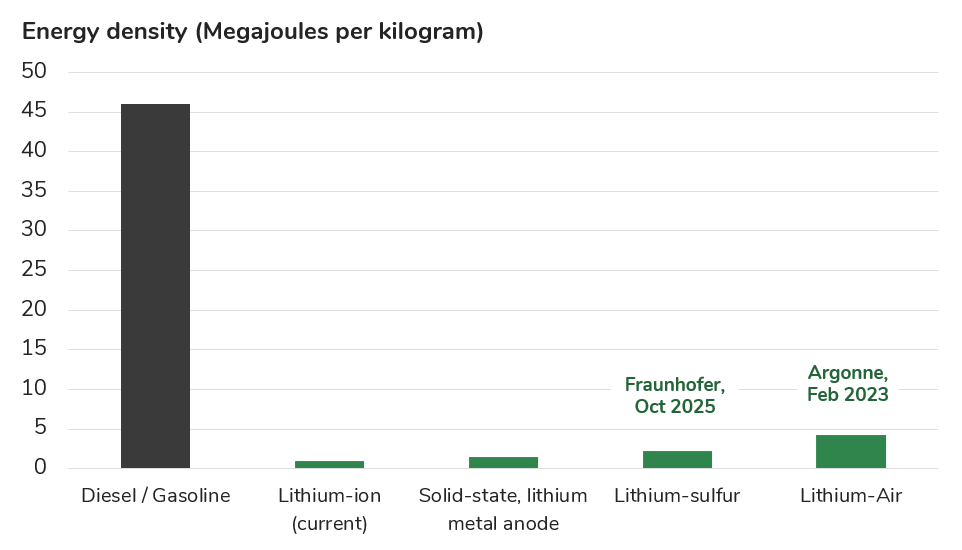
Yet despite a decade of attention and investment, these bets are still only on track to yield relatively marginal improvements. Quantumscape, the publicly-traded standard bearer of solid-state, lithium-metal battery technology, is currently touting “B Sample” cells at roughly the same energy density of top commercial incumbent cells: ~300 watt-hours per kilogram. And even the most ambitious projections for this class of batteries would only improve on conventional lithium-ion by around 50%.
Don’t get me wrong: 50% longer range would be a tremendous boon for the electric vehicle market, and I believe it would begin to open up the heavy duty trucking segment as well (…as long as additional range doesn’t come with a much higher price tag). But as you can see in the chart below, even a 50% improvement is a drop in the bucket compared with the density advantage of fossil fuel.
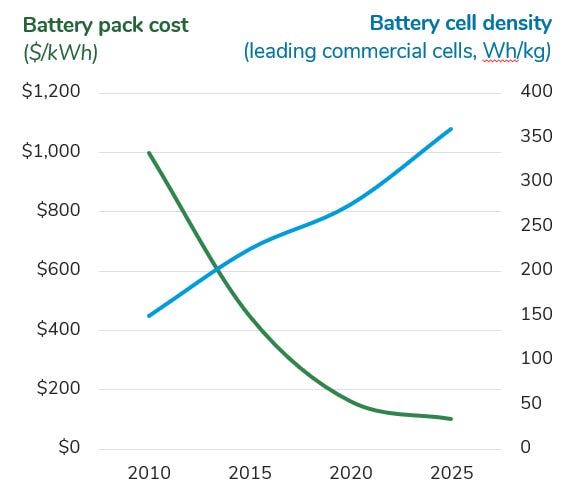
Meanwhile, when it comes to the cost of a battery, progress on lithium-ion has begun to reach a point of diminishing returns. The cost of LFP battery cells is nearing the price floor set by the cost of materials and the bare minimum of a margin for manufacturing (in China) — which is probably around $50 per kilowatt-hour.3
However, this is much, much lower than the full cost of building a grid storage system, which requires integrating cells together into packs, stringing those packs together into fully enclosed power blocks, then adding controls, power conversion, cooling, and fire suppression. Altogether, the cost of a fully installed system adds up to around $400 per kilowatt-hour. At that rate, adding just four hours’ worth of storage to a solar farm more than doubles the total cost of energy. A day’s worth of energy storage would cost about six times as much as solar or wind energy per kilowatt.4
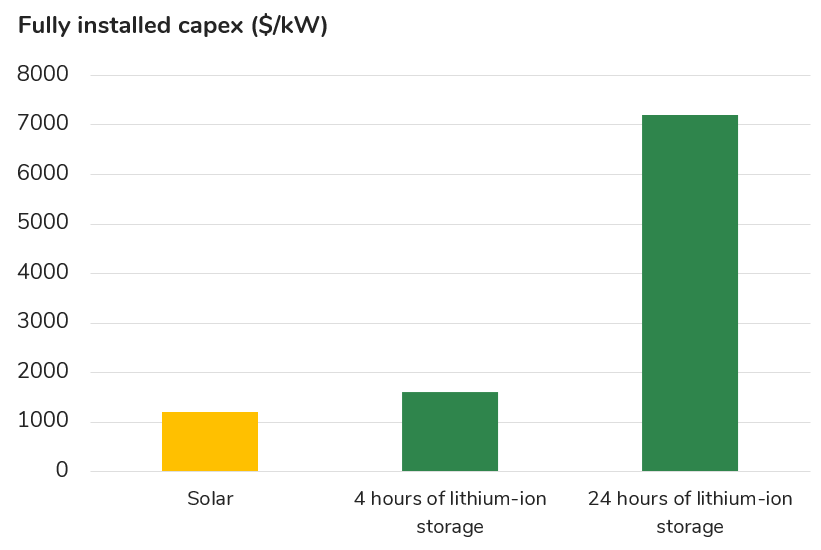
We’re still in the early days of grid storage system design and deployment; and over time, I expect that the cost of building a grid storage system with LFP batteries can be cut down substantially — perhaps by as much as 50%. But that would still make storage beyond about 10-12 hours completely untenable.
Hence, I’m sorry to say I don’t yet see an “uber battery” on the roadmap for lithium-ion.
But what if we break this problem down? What if, instead of a single “uber battery” to rule them all, we sought out one “uber dense” battery, and one “uber cheap” battery?
In that case, I think lithium may still have a role to play, out on the distant horizon…
The Path to an uber-dense battery
Because of lithium’s unique electrochemical advantages, uber-density is most likely to be found on the outer limbs of the lithium family tree.
There are at least three more audacious bets to make, out there on the periphery. Of course, the path to success along each of these limbs is beset by knots and thorns. There’s no guarantee of success, but researchers have logged some promising milestones in recent years. In particular, we appear to be making progress on improving rechargeability (or “cycle life”), which is a fundamental challenge for all three of these options.
Sulfur has great theoretical promise as a cathode material, and “lithium-sulfur” batteries aim to take advantage of that promise: high energy density, low cost, and global abundance.5 Just a few months ago, the Fraunhofer Institute in Germany planted a new flag in this nascent category, with encouraging results from a demonstration cell. According to Fraunhofer researchers, developing a battery with twice the energy density of leading NMC cells is now “within reach”, at roughly the same price point. (They’re targeting a density of ~600 watt-hours per kilogram.)
“Interhalogen” batteries are a less well-known concept, but we’re beginning to see a trickle of discussion in public forums. (Most notably promoted by Wh-Power.) These batteries are marked by cathodes comprised of mixed “halogens” — a column of highly reactive elements on the periodic table (most commonly zinc, chlorine, flourine, or bromine). For reasons I won’t claim to have enough chemistry background to understand, researchers believe that achieving 500-1,000 watt-hours per kilogram is theoretically possible.
“Lithium-air” makes use of oxygen — which is freely available in ambient air — as a cathode material. The goal is to strip down a battery to the smallest & lightest possible elements to carry out redox reactions — lithium and oxygen — and the bare minimum of additional materials needed to control those reactions. Back in 2023, Argonne National Lab announced a landmark demonstration of this approach, with a compelling combination of energy density and rechargeability: 685 watt-hours per kilogram, running for over 1,000 cycles, and “a real opportunity” to achieve over 1,000 watt-hours per kilogram.
Continuing down any of these paths (particularly interhalogen and lithium-air) could theoretically yield a battery which would outlast the driver in nearly any vehicle on the road. (Everybody needs to sleep.) This would be an extraordinary achievement — absolutely fusion-level, in my opinion.
However, I hate to be a repetitive stick in the mud, but damn is it hard to compete with fossil fuel.
Even a theoretical 1,000 watt-hour per kilogram battery would not be dense enough to make a difference in the aviation or shipping markets. And that’s even before considering the myriad obstacles to building sufficient battery charging infrastructure at ports and airports.
The Path to an uber-cheap battery
If your goal is uber-cheap storage, and density is not a big factor, then there’s no reason lithium should be your starting point for a battery. Lithium is not an especially abundant or easy to refine metal, which means it’s relatively expensive.
However, as I discussed above, lithium-ion battery manufacturing is extraordinarily advanced. That’s why the first option we should consider for an uber-cheap battery is a close “cousin” of lithium-ion — a battery which can repurpose a lot of the same production equipment, as well as hard-won process knowledge of the lithium-ion industry. This technology is sodium-ion.
Back in January, I posed the question: “Is Sodium the new Lithium (ion)?”, and I outlined a list of reasons why this might be the case:
Sodium is heavier than lithium, but not so heavy that lower-range transport applications are completely out of the question. In fact, there are already at least two Chinese electric vehicle brands rolling out products powered by sodium-ion.
Sodium is about 1,000 times more abundant in the earth’s crust than lithium, and is easily accessible just about everywhere. (Nobody ever complains about the price of table salt.) It’s true that lithium has turned out to be a lot like hydrocarbons, in that high prices have proven to be a fantastic solution to high prices; the more we go searching for lithium, the more we seem to find. Yet, there is something inherently attractive about a battery based on a much, much more abundant foundational mineral.
This abundance is especially attractive for those of us who want to see more robust battery supply chains built outside of China. China is currently the third largest producer of raw lithium, and controls about 70% of the world’s lithium refining capacity. While China is also the breakout leader in sodium-ion battery manufacturing, sodium has a clear advantage when it comes to the geopolitical dynamics of the supply chain.
Sodium also has some safety advantages over lithium-ion. Although the lithium-ion industry has made great progress on fire risk mitigation over the past decade, sodium-ion batteries have an inherently lower risk of thermal runaway, and can utilize non-flammable electrolytes. This can further reduce the cost of batteries at the full pack or system level, by limiting the need for fire suppression equipment.
LFP has a material price floor around $25 per kWh, which is mostly just the cost of the lithium, iron, and phosphate. And, because of lithium’s relative scarcity, the odds are much greater that this price trends higher than lower. Meanwhile, the material price floor for sodium-ion — specifically, for sodium-ion formulations which avoid using nickel in their cathodes — is just a couple of dollars per kWh… and very unlikely to increase. The cost is practically all in the manufacturing. Hence, this paper finds that the total cell cost could dip into the $25/kWh range.
This possibility should leave nearly all other aspiring energy storage technology developers quaking in their boots.
Since this post, I’ve become even more bullish on the prospects for sodium-ion. In just the past year, the nascent industry has coalesced on a particularly low-cost, high performance cathode formulation — “sodium iron pyrophosphate” (NFPP) — which is essentially the sodium-ion version of LFP. As global lithium-ion giants have focused more attention on this chemistry — including, notably, CATL — the kinks are rapidly being ironed out.
Additionally, the theoretical advantages of sodium-ion at the fully integrated system level are proving to be even more compelling than I previously understood. I’ve been following an early-stage company called Peak Energy, which has developed a sodium-ion system from the ground up in order to take advantage of the chemistry’s distinctive strengths. In particular, Peak is leveraging sodium-ion’s high tolerance for high and low temperatures, which is vastly superior to lithium-ion. The result is a storage system without all the expensive, failure-prone, maintenance-heavy HVAC equipment that lithium-ion requires to stay within a narrow temperature band. According to Peak: “By removing active cooling, fans, pumps, and other moving parts, our product eliminates over 85% of the root causes behind historical system failures.”
So, I find myself increasingly convinced that sodium-ion has a chance of supplanting lithium-ion in grid storage over the next five years.
But even sodium-ion, however, is unlikely to become cheap enough to afford more than a day’s worth of energy storage.
Now, to be clear, we don’t strictly need a day’s worth of storage, in most scenarios. In fact, 12-16 hours of storage is probably just fine, as long as we’re willing to rely on a modest amount of fossil fuel to fill in seasonal gaps in solar & wind energy supply. In my view, this is going to be the most pragmatic approach, in most parts of the world, for many decades to come.
But in regions with access to especially low-cost renewable power, or especially high reliability challenges, adding a lot more storage could be worthwhile. In the windy, sunny plains running down the middle of the United States, for example, lots more renewables paired with ultra-long-duration storage could be the right move… as long as we can build that storage for an ultra-low price.
My firm, Energy Impact Partners, is an investor in Form Energy, which has developed a distinctive approach to making a much cheaper, longer-duration battery. Form’s first product is a 100-hour system with a 90% lower cost per kilowatt-hour than lithium-ion storage. The Form team selected that particular duration — four days of storage — because they determined that it’s usually enough to cover extended shortfalls in the availability of solar or wind energy. (Coincidentally, this phenomenon of four-day-long “doldrums” appears to be remarkably consistent across continents and climate zones.)
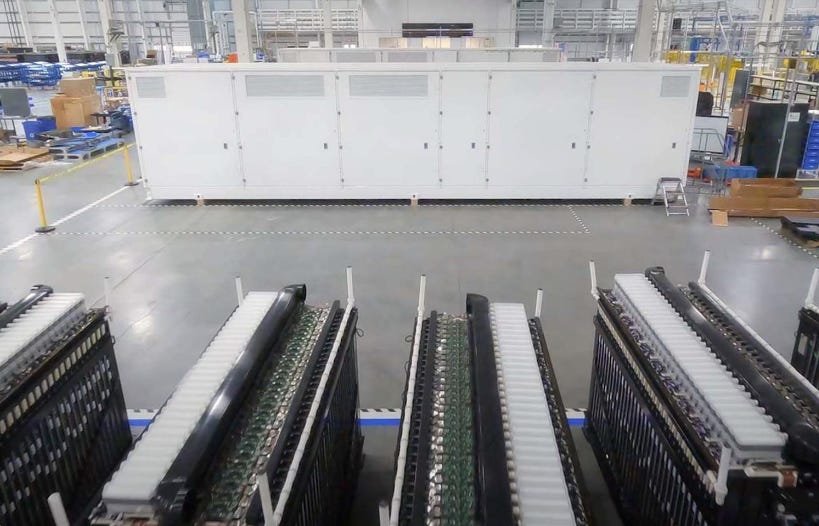
Form’s technology is an iron-air battery, which is in the same ballpark, conceptually as a lithium-air battery, in that it also makes use of oxygen as a cathode material. In Form’s case, however, the system is optimized for the lowest possible bill of materials and assembly, rather than high energy density. Form is now beginning to manufacture this technology at high volume in its first manufacturing facility in West Virginia, with a long list of customers preparing to deploy commercial projects.
And then there’s thermal batteries, which are not really “batteries” in the colloquial sense of the word, because they store and release energy in the form of heat, not electric power. This is obviously a disadvantage if you need electricity. But, if you’re looking to convert wind or solar electricity into heat — say, to displace natural gas combustion in an industrial process — then thermal storage can be an extremely low-cost, hyper-efficient option.6
At Energy Impact Partners, Rondo Energy is our bet in this category. Since we initially invested back in 2021, I’m proud to say that the company has successfully crossed the chasm of full-scale commercial deployment, and has begun lining up real commercial orders. Rondo stores energy in the form of extremely hot bricks reaching well over 1,000 degrees celsius. This high temperature enables the product to serve nearly all industrial heating loads directly, and bricks are about as cheap as it gets as a thermal storage material. Rondo should be able to achieve a 90% lower up-front cost than lithium-ion systems (similar to Form).
And yet, even a 90% cost advantage is not enough for an uber-cheap battery to deliver the kind of economic stability and security benefits that we get from massive stockpiles of coal, gas, and oil. (Recall that we generally keep more than 45 days of fossil fuel on hand at any given time.) And obviously, neither Form nor Rondo systems have the density required to function as inter-regional energy carriers.
Unfortunately, in my view, there’s probably no path to a “battery” of any kind that would work for these extreme energy storage & transportation challenges.
But there is another path that might…
Another Path: Mineral Metal fuels
When I named this blog “Steel For Fuel”, I wasn’t thinking about the idea of metal fuels at all. But the name might prove serendipitous…
First, a little chemistry refresher: Oxygen is a highly reactive element. In lay terms, oxygen wants to bond with (“oxidize”) most other elements. When it does, the reaction produces energy. (It’s “exothermic”.)
This is the reaction at play when we burn fossil fuel. We use heat to break up hydrocarbon molecules, freeing the embodied carbon and hydrogen to bond with oxygen in the air. These reactions generate enough heat to be self-sustaining, with plenty left over to perform useful work — for example, by boiling water, or firing a piston.
But carbon and hydrogen aren’t the only elements which readily bond with oxygen. The majority of the periodic table — elements we colloquially refer to as “minerals” but are more technically called “metals” — will work.
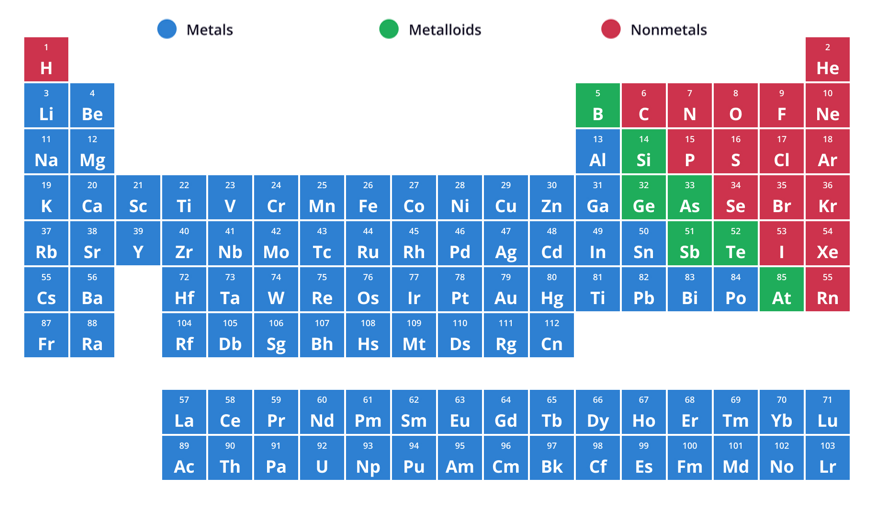
The idea of using metal as a “fuel” may sound absurd. After all, we don’t tend to think about metal as being something one can burn; thankfully, the metals we’ve chosen to use in our day-to-day lives don’t readily catch fire. But everyone has experience with metal oxidation — just the slow version, which we commonly call “rust” (or “verdigris” in the case of copper). And many people actually do have some experience with burning metal. For example, if you had a chemistry set as a kid, you may recall lighting a strip of magnesium on fire. It’s hard to forget, because magnesium catches fairly easily and then burns fast, hot, and bright. And even more people are familiar with the impact of burning traces of metal in fireworks.

Here’s another mind-bender: It turns out that some metals boast an effective energy density on par with hydrocarbons. In fact, relative to coal a whole slew of relatively earth-abundant metals contain more energy by volume. The list includes magnesium, manganese, calcium, iron, zinc, and aluminum (which can also beat coal on energy density by weight).
Every one of these metals is vastly more energy dense and stable in normal conditions than any electrochemical “uber battery” under development.
This begs the question: Why has the concept of “metal fuels” been so underappreciated, for so long? Why hasn’t it been more widely appreciated, beyond a miniscule community of energy geeks?
I think the answer is that the concept is just so intuitively outlandish, at first blush — and for good reason. Let me break it down:
Hydrocarbons, when we encounter them in nature, are ready to burn. Eons of photosynthesis have already done the hard work of stripping the oxygen from those embodied hydrogen atoms, and binding them together with carbon into nice, stable molecules — which additional eons of pressure have concentrated for us to extract. Metals, on the other hand, are almost always oxidized when we encounter them in nature. Metal “ore” effectively means “metal oxide”.
Hence, “metal fuel” is not going to be the kind of fuel we extract from the earth directly. Instead, we need to find a way to cleave oxygen from a suitable metallic element, which is inherently going to require expending some energy. Chemically, this step is known as “reduction” — the opposite of oxidation. But you can imagine the process as the equivalent of “charging” a battery. Hence, metal fuel is really a means of storing energy.
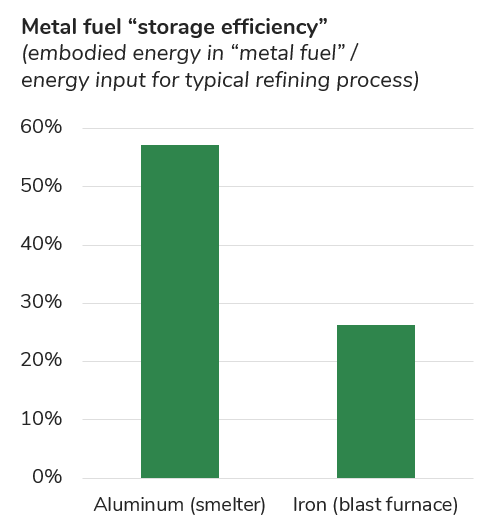
This area of metallurgy — reduction of ore into pure metal — is already well established for all of the major metals in question. For example, the processes for reducing iron ore (in a blast furnace) and aluminum ore (in an electric smelter) have both been honed for over a century. These processes require enormous, expensive facilities, and even more problematically from an energy system standpoint, they’re not particularly efficient as a means of storing energy. Aluminum smelters are about as good as it gets, and we still only end up with about 60% of the energy input embodied in the form of pure metal. Hence, this “reduction” step is the first area in which we need a major leap forward in order to unlock the promise of metal fuels.
Once we’ve produced some metal fuel, we need to find a way to extract the energy from it. We could just burn it, but depending on the metal in question, combustion comes with major engineering design challenges — e.g. extremely high temperature, and the difficulty of recovering metal oxide to be “recharged”. Plus, if we want to extract energy in its most valuable form — electric power — then combustion is a grossly inefficient approach. (You lose 60-70% of the energy in a conventional steam turbine.) Hence, the whole category of metal fuels also needs a better way to extract energy from an oxidation reaction.
But just imagine if we get this right…
Imagine a form of fuel which could be produced by the cheapest sources of renewable energy found anywhere on earth, and then delivered across thousands of miles on standard railcars or cargo ships. We could store as much of it as we want, for as long as we want, perhaps even more easily than coal.
There’s only one “waste” product: metal oxide. But instead of floating up into our atmosphere, like the world’s most infamous oxidized waste product (CO2), the waste from metal fuel is easy enough to load back into those same railcars and ships, and return to the beginning of the cycle to recharge.
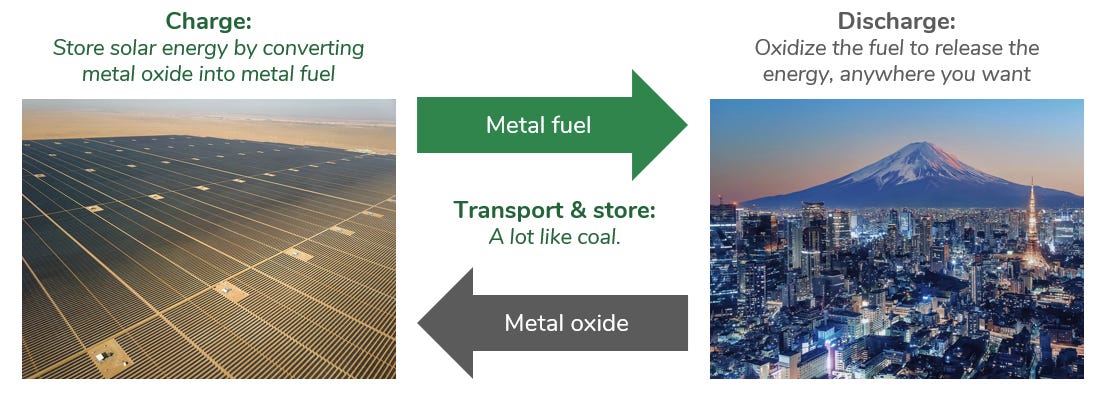
This is the ultimate vision for metal fuel: renewable energy, packaged up to carry energy around the world like coal, in a fully closed loop. This could be the best way to haul solar energy from Australia to Tokyo, and it’s probably the best way to power the ship that carries it across the ocean.
Now that’s what I call “fusion-level” technology.
And best of all, I believe we may be a lot closer to commercializing this technology than any of the others I’ve discussed in this series. While the number of people working on metal fuel is still remarkably tiny relative to the size of the opportunity, we’re finally beginning to see a trickle of entrepreneurial activity flowing into the space.
That trickle includes a few of my colleagues at Energy Impact Partners, who spent well over a year on a deeply technical quest to identify an attractive technical pathway for metal fuel. (@Shayle Kann, @Greg Thiel) We ended up incubating a company, along with some incredible founders — Richard Wang, Matt Horton, and Steven Kaye — who are now off to the races building Voya Energy.
I’m sorry to say I can’t share much more detail just yet — no, not even which metal they’re transforming into fuel! What I can say is that I’ve rarely been this excited about a project in my fifteen years working in energy technology. Voya has a remarkably pragmatic plan for commercializing metal fuel, in stages, with a pretty clear pathway to civilizational impact. We’ll hopefully be able to share more information before too long.
Towards fusion-level energy
I hope you’ve enjoyed these three posts on the biggest bets society can make on the future of energy — which is to say, the future of human civilization.
This year has been a harsh reminder of how daunting it is to transform the global energy system. We’ve always had the global energy “trilemma” to contend with — the need to balance the goals of affordability, security, and low emissions, which are often in tension. But now we have a “quadrilemma” on our hands, as booming power demand has made speed a critical fourth objective.
It has also become abundantly clear that the voting public will not countenance much deviation from affordability, security, and speed, in pursuit of lower emissions.
There’s no way to do this without some additional, fusion-level technology. That means we need to make some more fusion-level bets. I’ve laid out six big categories over the past three posts (Part 1, Part 2, and Part 3 here).
Please let me know if you think there are any important categories I’ve missed!
Loyal Steel For Fuel readers, I appreciate you sharing this with friends and colleagues. And new readers, please hit that Subscribe button!
The cheapest sources of thermal energy, and in many places still the lowest marginal cost of electricity generation.
Flow batteries generally can’t beat lithium-ion economically until you need at least than 12 hours’ worth of storage.
S&P Global puts average the cost of LFP cells below $60/kWh in 2025.
I’m assuming that economies of scale in a longer duration system could reduce the cost of storage by around 35%, to $300/kWh.
Many years ago, at a conference, I had the chance to speak informally with a world-renowned battery technologist and cofounder of multiple battery companies. I asked him where he thought lithium-ion technology was headed, in the long run. I remember how he leaned in close — as though he were that businessman in “The Graduate” who whispers “plastics” to Dustin Hoffman — and he said to me, simply “lithium sulfur”.
Rondo’s thermal storage solution has a round trip efficiency over 95% in a power-to-heat cycle. Because energy is lost in the form of heat, thermal storage in general can be extremely efficient.
Thank you Andy for a fascinating series.
While you reviewed the spectrum of different "bets", you never got to stating which technology was the best bet for transformative impact.
Clearly you're encouraged by metal fuels, but they seem to have a long ways to go yet. Thus reviewing your analyses of the other techs, am I right that you see solar + batteries as having the best chance to get us to an abundant, cheap, low-emission future?
Metal fuels - super interesting! Reminds me of a company in the early 2000s working to commercialize mechanically recharged zinc metal batteries for EVs - pumping a powdered slurry in and out. I realize this is electrochemical, not thermal, but was tickled to find an early 1970s paper on it. Hopefully a more practical approach is on the horizon!
https://apps.dtic.mil/sti/tr/pdf/AD0753361.pdf